
Fan Motor vs. Compressor: What's Actually Failing in Your RV AC?
Posted by RV AC Guys on 27th Oct 2026
Two parts, two very different repairs
When an RV air conditioner stops cooling, the fan motor and the compressor are two of the usual suspects. The difference matters: a fan motor is a part many owners can replace themselves, while a compressor is part of the sealed refrigerant system and needs a certified technician. Before you assume the worst, here's how to tell them apart.
Safety first: turn off the AC breaker, shore power, the generator and the inverter before removing the shroud. Capacitors can hold a dangerous charge even with the power off, so discharge them or leave the wiring to a tech.
What each part does
- Fan motor: spins the indoor blower wheel (which pushes cold air through the ceiling vents) and the outdoor condenser fan (which pulls heat out of the unit). Many rooftop units use one motor for both; some use two.
- Compressor: pumps refrigerant through the coils. It's what makes the air cold.
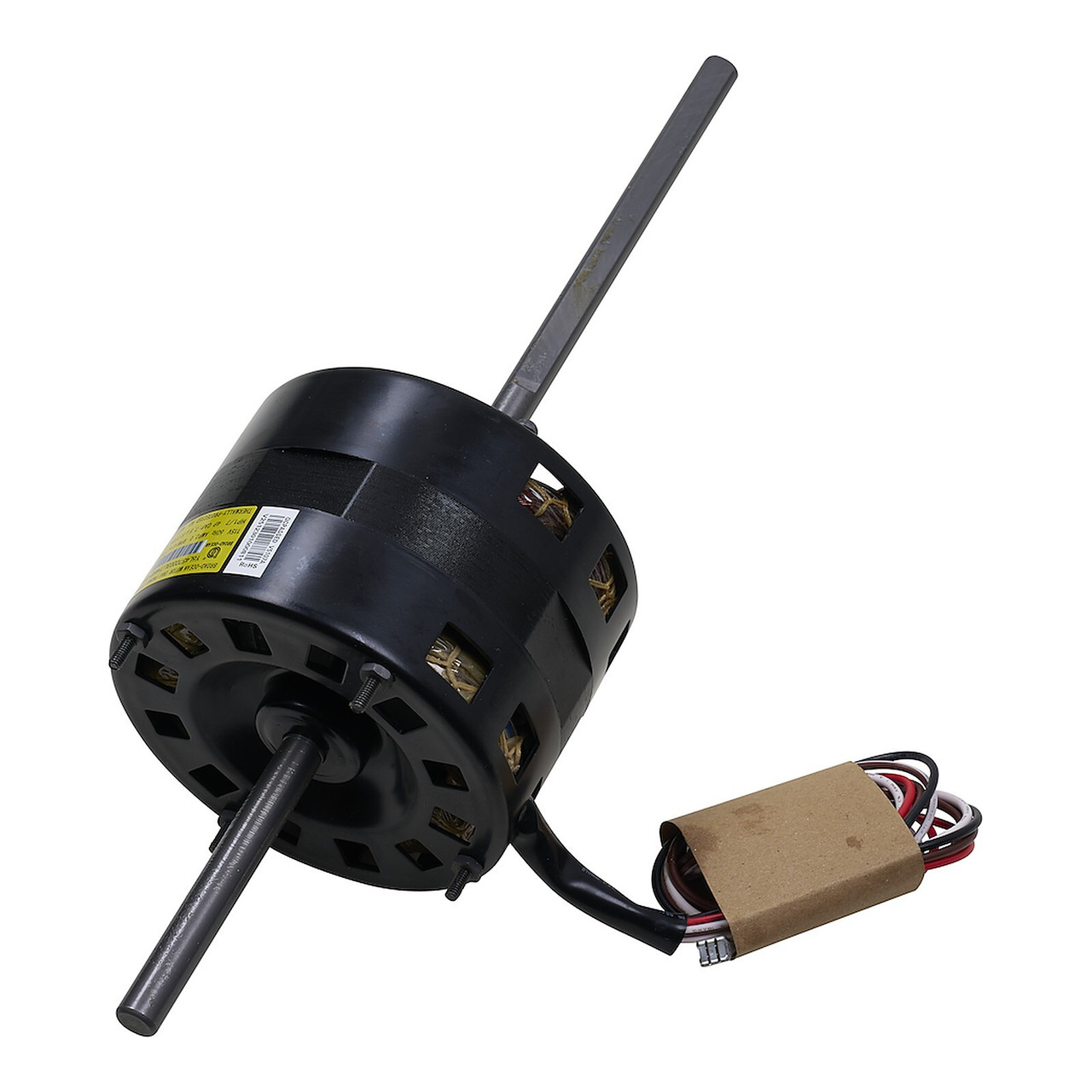
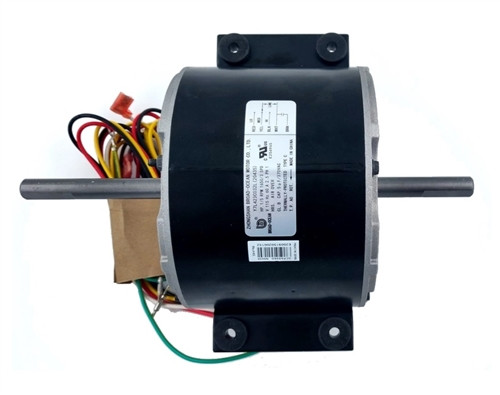
Fan motors are model-specific: Coleman-Mach 1468-3459 for the Mach 10 (left) and Dometic 3315332.005 for the Brisk II (right).
Signs the fan motor is the problem
- No air from the vents, or very weak air, even on high fan.
- You hear the compressor run, but the fan doesn't spin, or spins slowly.
- A squeal that gets louder over time, which usually points to worn or dry bearings.
- A hum from the motor with no movement, which can be a weak capacitor or a seized motor.
- The fan blade turns stiffly or wobbles when you spin it by hand (power off).
- The coil freezes up because air isn't moving across it.
Signs the compressor is the problem
- The fan runs and air moves, but it's never cold.
- The compressor hums or clicks but never starts, then shuts off.
- The breaker or generator trips every time the compressor tries to start.
- Grinding or knocking from inside the unit. Shut it off right away; running a struggling compressor can finish it off.
Check the capacitor first
A failed capacitor can make either part look dead. Capacitors give the compressor and fan motor the push they need to start, and they're far cheaper than either part. Our post on bad capacitors and frozen coils walks through testing one safely. If the compressor starts fine on shore power but struggles on a generator, a soft start may be the fix.
Quick diagnosis
| What you notice | Most likely cause |
|---|---|
| No airflow; compressor running | Fan motor or its capacitor |
| Squealing that gets worse | Fan motor bearings |
| Rattling or vibration | Loose shroud, debris in the fan, cracked blade or loose mounting bolts |
| Air moves but never gets cold | Compressor, its capacitor or relay, or a refrigerant problem |
| Hums, clicks, trips the breaker at start | Capacitor first, then the compressor |
| Grinding from inside the unit | Compressor; shut it off and call a tech |
Replacing a fan motor
Fan motors are model-specific: shaft length, rotation, speed and the capacitor they use all vary. Start with your rooftop unit's model number (here's where to find it) and match it on the product page. Replace the run capacitor at the same time if it's original; it's a small cost while you're in there.
- Coleman-Mach: fan motors and capacitors, including the Mach 10 condenser fan motor 1468-3459, evaporator fan motor 1468C3389 and the Mach 8 blower motor run capacitor kit 1499-6441.
- Dometic: fan motors, including the Brisk II fan motor 3315332.005, Penguin fan motor 3309333.007, Blizzard NXT condenser fan motor kit 3316314.000 and FreshJet 5 condenser fan motor 4450037543.
- Furrion: Chill evaporator fan motor C-FACR15SA-004 and condenser fan motor C-FACR15SA-006.
- Blower wheels and fan blades: if the motor is fine but the wheel or blade is cracked, see Coleman-Mach blower wheels and Dometic blower wheels.
If it's the compressor
Replacing a compressor means opening the refrigerant system, which requires an EPA-certified technician. Before going that route, have the tech rule out the cheaper parts: capacitors, the compressor relay and, on some Dometic units, the compressor overload protector 3312138.000.
On an older unit, the parts and labor for a new compressor can approach the price of a new rooftop AC. Get a quote for both. If your unit is discontinued, our guides to Coleman-Mach replacements and Dometic replacements can help you pick a replacement. We also carry Coleman-Mach compressors for techs and shops doing the repair.